Building confidence in scuba diving comes from preparing well, understanding your own readiness, communicating openly with the people you dive with, making sound decisions and reflecting on what each dive teaches you. Confidence is not a reward handed out with a certification card, and it is not the same as feeling calm. A diver can feel relaxed and still be underprepared for the conditions ahead, while another can feel apprehensive and be entirely capable of the dive.
The aim, then, is not simply to feel more confident. It is to develop confidence that accurately reflects your skills, your limits and the circumstances of each dive. This guide explains what that kind of confidence looks like, why it varies between divers and between dives, and how you can build it in a way that supports good judgement rather than replacing it. Whether you have recently qualified, feel less sure of yourself than you expected, or are returning after time away, the same principles apply.
What Does Confidence in Scuba Diving Really Mean?
In recreational scuba diving, confidence is your belief in your ability to plan, carry out and manage a dive, including how you would respond if something did not go to plan. Psychologists describe a closely related idea as self-efficacy: a person's belief in their capacity to succeed at a specific task. Albert Bandura, who developed the concept, proposed that these beliefs influence whether people attempt something, how much effort they invest and how long they persist when it becomes difficult (Bandura, 1977).
Belief and ability are separate things. Competence describes what you can actually do, such as controlling your buoyancy, managing your equipment and responding to problems. Certification records that you met a training standard at a particular point in time. Neither guarantees how you will feel on your next dive, and neither is guaranteed by how you feel.
This is where calibrated confidence becomes useful. Calibrated confidence means your confidence matches your real abilities, limitations and circumstances. A well-calibrated diver feels assured about dives that sit comfortably within their training and experience, and appropriately cautious about dives that do not.
Calibration can be off in either direction. Some divers have solid skills but still doubt themselves, which can make diving less enjoyable than it should be. Others feel highly confident without fully recognising the gaps in their skills or experience, which can lead them into situations they are not ready for.
Why Do Some Divers Struggle with Confidence?
Confidence in diving is context-dependent. The same diver can feel at ease on a familiar shore dive and uncertain on a boat dive in a current, and both responses can be reasonable. Several factors commonly influence how confident a diver feels.
Limited experience after certification is one of the most common. Entry-level training introduces the essential skills, but much of a diver's familiarity with the underwater environment develops in the dives that follow. Newly qualified divers may simply have had few opportunities to see their skills work in different settings.
If this sounds familiar, read more about why you might still feel nervous about scuba diving after certification and how to assess your readiness for your next dive.
Unfamiliar conditions and equipment also play a part. Colder water, reduced visibility, a new exposure suit, rented equipment or a different style of entry can each make a dive feel less predictable, even when the underlying skills are sound.
Previous uncomfortable experiences can leave a lasting impression. A difficult descent, a moment of disorientation or a separation from a buddy may shape how a diver approaches similar situations later, sometimes long after the event.
Gaps between diving trips matter too. Many recreational divers dive mainly on holiday, so months can pass between dives. Skills and knowledge fade without practice, and divers often sense this. Changes in personal circumstances, such as health, fitness, family responsibilities or work pressures, can also alter how ready someone feels.
Social expectations and comparison can affect confidence as well. It is easy to measure yourself against more experienced divers on a boat, or to feel you should be further along than you are. Those comparisons rarely account for differences in training, experience or comfort.
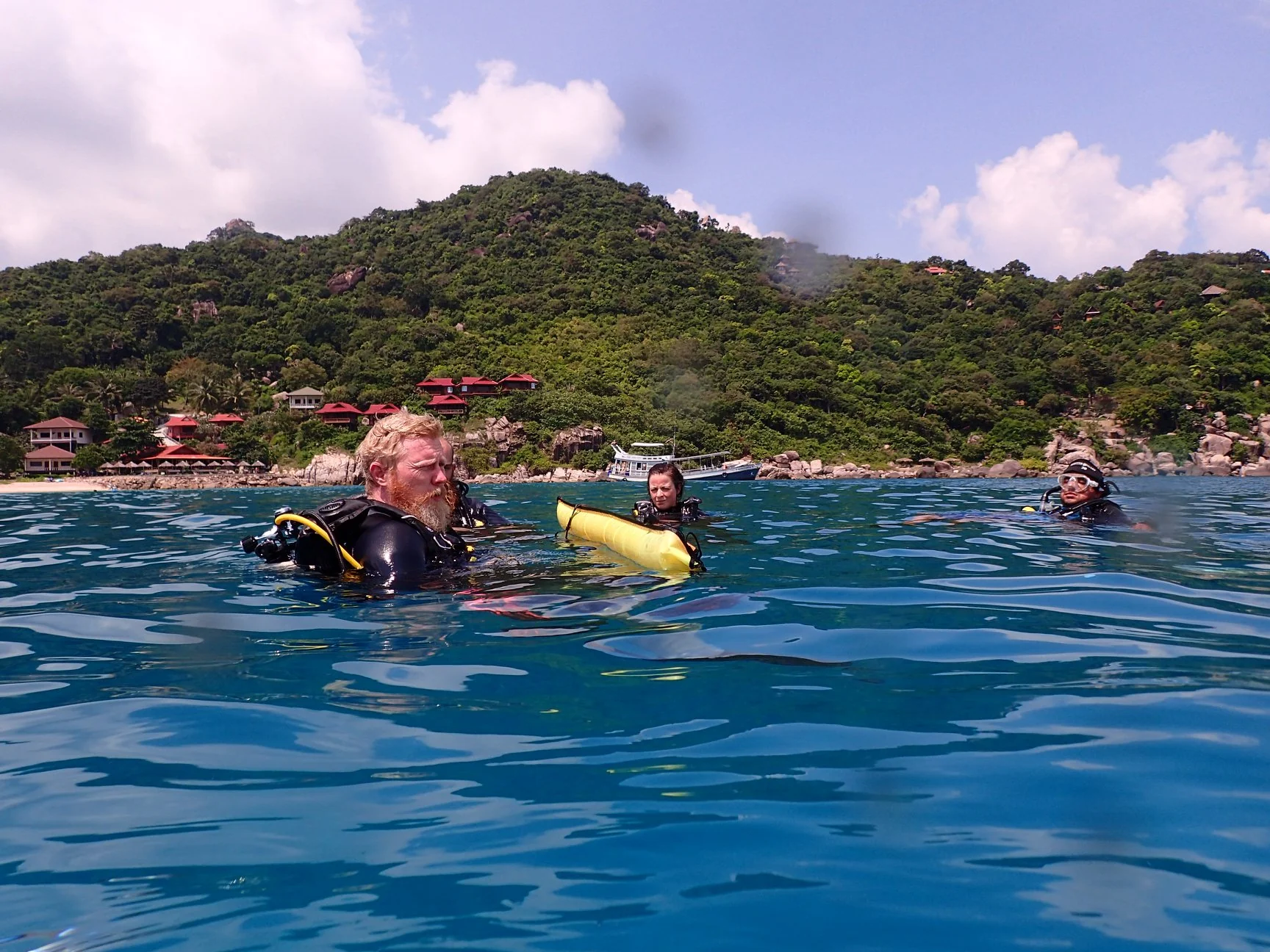
During my time as a scuba instructor, I delivered Discover Scuba Diving experiences in very different settings. In Thailand, sessions could run over an afternoon or a full day. Later, at a UK diving facility, the whole experience followed a much tighter schedule of around two hours. Participants had approximately 15 minutes to practise and demonstrate the required skills before they could progress. Some appeared comfortable almost immediately; others needed longer to become familiar with the equipment and the unfamiliar experience of being underwater.
If someone could not demonstrate the required skills in that window, they could not continue. I remember participants who I believed could have completed those skills with more time. The standards were essential, but the schedule limited their opportunity to practise. It showed me that the time available for an experience and the time someone needs to learn are not always the same. Neither a quick start nor a slower one tells the whole story of a diver’s future confidence or ability.
None of this means uncertainty is irrational or always something to overcome. Hesitation can be useful information, prompting a diver to prepare more carefully or to reconsider a plan.
Five Ways to Develop Scuba Diving Confidence
The five approaches below reflect the foundations of the Dive Attune programme: preparation, self-awareness, communication, good judgement, and experience and reflection. They work best together rather than as a checklist to complete once.
1. Prepare for the Dive, Not Just the Conditions
Good preparation covers more than checking the forecast and the dive site. It also means preparing yourself. That includes reviewing the skills the dive is likely to call on, familiarising yourself with your equipment, agreeing a dive plan with your buddy and understanding the conditions you are likely to meet.
Preparation should address your own needs as well as the site's. If you have not used a particular piece of equipment for a while, a shallow familiarisation dive or a pool session may help more than further reading. If a site's entry worries you, finding out exactly how it works can turn a vague concern into a manageable one. Preparation supports confidence because it replaces assumptions with information.
2. Build Self-Awareness and Recognise Your Limits
Self-awareness means recognising what you can currently do, what feels unfamiliar and how you are feeling on a particular day. Your sense of capability is useful information, but it is not a substitute for checking your actual skills and readiness. Feedback from an instructor, practice in suitable conditions and honest reflection can help reveal both strengths and gaps.
Honest self-assessment can start with specific questions. Which part of the dive concerns you, and why? Is it unfamiliarity, which experience in suitable conditions may ease, or a genuine gap in skills, which may call for further training? Naming a concern precisely tends to be more useful than either ignoring it or trying to think your way past it.
3. Communicate Openly with Your Dive Buddy
Clear communication before a dive allows you and your buddy to agree on the plan, the limits and what each of you will do if something changes. It is also the moment to mention any concerns, ask questions and confirm that either of you can end the dive.
Sharing an uncertainty is not a weakness. A buddy who knows you are uneasy about a descent or a current can plan with you rather than around you. Divers Alert Network (DAN) encourages divers to respond supportively when a buddy calls off a dive, rather than making them feel they must justify the decision (DAN).
A buddy is a partner, however, not an instructor. If a concern relates to a skill you have not yet mastered, the right support is usually a dive professional.
4. Make Decisions Based on Readiness, Not Pressure
Good judgement means basing decisions on your training, experience, conditions and readiness rather than on what others expect. Social pressure can influence diving decisions, particularly when everyone else seems comfortable with the plan. Being willing to ask a question, change the plan or decline a dive is part of taking responsibility for your own limits.
A diver should be able to call a dive without feeling pressured to justify that choice. Deciding not to dive, shortening a dive or changing the plan may be the most appropriate decision. Confidence should support that judgement, not override it.
5. Learn from Every Diving Experience
Reflection turns experience into learning. After a dive, consider what went well, what felt difficult and what you would do differently next time. You might note this in your logbook or talk it through with your buddy.
A review does not need to be formal. A few honest notes about the conditions, decisions and skills involved can help you notice patterns over time. Research on structured debriefing in other settings suggests that feedback and review can support performance, although this is not direct evidence of improved outcomes in recreational scuba diving (Tannenbaum and Cerasoli, 2013).
Not every dive will feel positive, and reflection does not need to produce a neat lesson. Sometimes the most useful conclusion is that a dive stretched you further than you would like, and that the next step is more practice in easier conditions or further training.
Does More Diving Experience Make You More Confident?
More dives usually bring greater familiarity, and often greater competence. They do not automatically bring better-calibrated confidence. Experience sharpens judgement most when it comes with feedback that shows whether a decision was a good one.
Research on expertise suggests that experience improves judgement most reliably when people have opportunities to practise and receive useful feedback. Subjective confidence alone is not a reliable measure of decision accuracy (Kahneman and Klein, 2009). This research was not conducted with recreational divers, so it offers a helpful framework rather than a diving-specific finding.
Diving does not always provide clear feedback. A dive that ends without incident may have gone well because of sound planning, or because nothing happened to test a weak decision. Without reflection, both outcomes can feel the same and build confidence equally.
That is why varied conditions, deliberate practice of specific skills, further training and honest review matter alongside logging dives. Overconfidence can develop at any level, but it is not a general trait of experienced divers. Many experienced divers are well calibrated precisely because they have kept learning.
What If Your Diving Confidence Has Gone Backwards?
Confidence is not fixed, and it can decline as well as grow. A long break from diving, an uncomfortable experience, or changes in health, fitness, responsibilities or priorities can all leave a diver feeling less sure than before. This is common, and it does not mean a diver has failed or should stop diving.
Returning divers may need time to refresh skills, check equipment and reassess what feels appropriate. Rather than using an arbitrary number of months as a rule, consider how recently you practised, the kind of diving you plan to do and whether a refresher with a qualified professional would help. A familiar, straightforward dive can be a more suitable return than an unfamiliar or demanding one.
Training agencies offer refresher options, including PADI ReActivate. If illness or a change in health has affected your time away, seek appropriate medical advice about fitness to dive before returning.
Gradual re-familiarisation allows confidence to rebuild on genuine evidence, one appropriate dive at a time.
Building Confidence Without Pushing Beyond Your Limits
Developing confidence does not mean ignoring discomfort or accepting unnecessary risk. Discomfort sometimes signals that a dive is simply new, and sometimes that something about it is genuinely not right. Telling the two apart is part of good judgement.
Your readiness for any dive depends on several things at once: your skills, the conditions, your equipment, your physical and psychological state, and the support available to you. A change in any one of them can alter whether a dive is appropriate, even if you have done something similar before.
Intense or persistent anxiety about a dive deserves attention, not pressure to continue. If concerns remain unresolved, consider discussing them with a qualified dive professional and, where relevant, an appropriate healthcare professional. Feeling more confident should never take priority over being ready for the dive.
Additional training, a more conservative plan or choosing not to dive are all legitimate ways of respecting your limits while you build on them.
Develop Your Diving Confidence with Dive Attune
Dive Attune is a self-paced programme for recreational divers who want a structured way to explore their confidence. I created it drawing on my experience as a recreational diver, diving writer and PADI Master Scuba Diver Trainer, including the different ways people responded during the Discover Scuba Diving sessions I taught in the UK.
The programme is organised into three stages. Prepare focuses on personal readiness, preparation and self-awareness. Build develops calibrated confidence through communication, experience and good judgement. Restore helps divers reflect on their experiences and maintain a sustainable relationship with diving. Throughout, it draws on the same five elements covered in this guide.
Dive Attune complements formal scuba training rather than replacing it. It does not provide instruction, medical advice or clinical support, and it is not a treatment for anxiety. Instead, it offers a structured space to think more clearly about your readiness, your decisions and what your diving experiences are telling you.
Explore the Dive Attune programme to see whether it fits where you are in your diving.
References and further reading
The psychological studies below inform the discussion of confidence, feedback and decision-making. They are not research conducted specifically with recreational scuba divers.
- Bandura, A. (1977). Self-efficacy: Toward a unifying theory of behavioral change. Psychological Review, 84(2), 191–215.
- Kahneman, D., & Klein, G. (2009). Conditions for intuitive expertise: A failure to disagree. American Psychologist, 64(6), 515–526.
- Tannenbaum, S. I., & Cerasoli, C. P. (2013). Do team and individual debriefs enhance performance? A meta-analysis. Human Factors, 55(1), 231–245.
- Divers Alert Network. Anyone Can Cancel Any Dive At Any Time For Any Reason.
- PADI. ReActivate: Refresh Your Scuba Skills.